


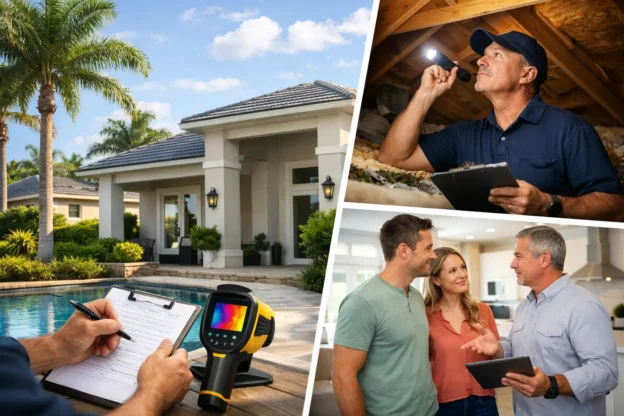
A house can look spotless at a showing and still have moisture at a window, aging electrical components, storm-related roof concerns, or an air-conditioning system nearing the end of its service life. In Southwest Florida, those details can affect your negotiating position, insurance options, repair budget, and confidence in the property. This Florida home inspection guide explains what a professional inspection is designed to uncover and how to use the results wisely.
A home inspection is not a pass-or-fail test. It is a detailed, visual assessment of a home’s readily accessible systems and components on the day of the inspection. The goal is to give buyers, sellers, and property owners a clear picture of the property’s current condition, including safety concerns, material defects, maintenance needs, and signs that further evaluation may be warranted.
Why Florida Homes Need a Different Level of Attention
Florida homes face conditions that are not minor background details. High humidity, intense sun, heavy rain, wind exposure, salt air near the coast, termites, and year-round air-conditioning use all place demands on a property. A thorough inspection considers how these local conditions affect the structure and its systems.
For example, a roof may appear intact from the ground but show worn seals around penetrations, aging flashing, or storm wear when viewed more closely. A thermal infrared camera can help identify temperature differences that may point to moisture intrusion or insulation concerns. Moisture detection tools can help confirm whether a suspicious stain is active or simply evidence of an older event. Drone-mounted cameras can also provide a safer, clearer view of roof areas that cannot be safely walked.
Technology supports the inspection, but it does not replace professional judgment. The value comes from connecting what is visible, what the tools indicate, and what the home’s age, materials, and location suggest.
What a Florida Home Inspection Typically Covers
A comprehensive residential inspection reviews the home’s major visible and accessible components. The exact scope can vary with the property type, condition, and inspection service selected, but a standard inspection generally examines the following areas:
- Roof covering, drainage, visible flashing, penetrations, and attic conditions where accessible
- Exterior surfaces, grading, foundation elements, windows, doors, soffits, fascia, and visible structural components
- Electrical service, panels, visible wiring, outlets, switches, and installed fixtures
- Plumbing supply lines, drains, fixtures, water heater, and visible signs of leaks
- Heating and cooling equipment, ducts where accessible, and basic system operation
- Interior rooms, ceilings, walls, floors, stairs, railings, cabinets, and built-in appliances
The report should document significant findings with clear descriptions and photographs. A useful report does more than identify a concern. It explains where the concern was observed, why it matters, and what type of next step may be appropriate.
Roofs, Attics, and Water Intrusion
Roof condition is a central concern for Florida buyers and insurers. An inspector looks for visible wear, damaged or missing materials, exposed fasteners, deteriorated seals, and conditions that could allow water entry. The inspection also considers drainage and the condition of gutters where present.
The attic can provide important context. Staining, damp insulation, daylight at roof penetrations, poor ventilation, and visible framing concerns can change the understanding of what is happening above the ceiling. Not every roof issue means replacement is immediately needed, but small deficiencies deserve timely attention in a climate where heavy rain can quickly turn a minor opening into interior damage.
Electrical, Plumbing, and Air Conditioning
Older homes may have electrical equipment that is outdated, improperly modified, or no longer suited to current needs. Inspectors check for visible safety concerns such as open panel gaps, improper connections, missing covers, and indications of overheating. A licensed electrician may be needed when repairs, upgrades, or a deeper evaluation are recommended.
Plumbing inspections focus on visible leaks, fixture operation, drainage performance, water heater condition, and accessible supply and drain piping. Water damage is not always dramatic. Soft cabinet bottoms, staining beneath a sink, corrosion at a connection, or elevated moisture readings can reveal a developing issue before it becomes a major repair.
Air conditioning is more than a comfort feature in Florida. It plays a major role in moisture control and indoor livability. An inspection includes basic operational observations, visible condition, and accessible components. Because the system’s remaining service life cannot be guaranteed through a visual inspection, buyers should pay attention to age, maintenance history, cooling performance during the inspection, and any recommended HVAC evaluation.
Insurance Inspections Are Not the Same as a Full Inspection
Homeowners often hear about 4-point inspections and wind mitigation inspections during the insurance process. These services serve specific purposes and should not be treated as substitutes for a full home inspection.
A 4-point inspection focuses on four primary systems: roof, electrical, plumbing, and HVAC. Insurers may request it for older homes or when underwriting a policy. It documents the visible condition and age-related characteristics of those systems based on the insurer’s required form.
A wind mitigation inspection documents certain construction features that can help a home resist wind damage, such as roof-to-wall connections, roof deck attachment, opening protection, and roof shape. Depending on the home’s features and the insurer, the report may support premium credits. It does not promise storm performance, but it can provide valuable documentation for insurance purposes.
For many buyers, completing a full inspection alongside any needed insurance inspections is the clearest approach. Each report answers a different question: What is the property’s overall visible condition, and what information does the insurer need?
How Buyers Should Use the Inspection Report
The report is most valuable when it becomes part of your decision-making process rather than a document you read once and file away. Start by separating significant safety issues, active water concerns, major system deficiencies, and repair items that need prompt attention from routine maintenance and cosmetic observations.
Then consider the property’s age and price point. A 25-year-old home will not present like new construction, and an older home with well-maintained systems may still be a sound purchase. The question is not whether the report contains findings. Nearly every property does. The question is whether the findings fit your budget, risk tolerance, timeline, and plans for the home.
If a concern needs a specialist’s opinion, schedule that evaluation quickly while you are still within your contract timelines. Obtain estimates when appropriate, and discuss repair requests or credits with your real estate professional. Clear documentation gives you a factual foundation for those conversations.
How Sellers Can Put an Inspection to Work
A pre-listing inspection gives sellers the opportunity to understand the home before a buyer’s inspection creates a time-sensitive negotiation. It can reveal maintenance items, visible defects, and conditions that may raise questions during a transaction.
Sellers do not need to repair every item noted in a report. Some items are routine maintenance, while others may warrant correction before listing. The benefit is control: you can gather estimates, complete repairs on your schedule, and provide accurate information to prospective buyers.
For condos, townhomes, manufactured homes, duplexes, and other multi-unit properties, the inspection scope should reflect the type of property and the components under review. Shared systems, association responsibilities, accessible common elements, and unit-specific conditions can all affect what should be examined and how the findings are interpreted.
Choosing an Inspector You Can Rely On
A dependable inspector should be licensed, insured, responsive, and willing to explain findings in plain language. Ask what services are included, how quickly the report will be delivered, whether photographs are provided, and whether technology such as infrared imaging, moisture detection, or drone photography is part of the service.
Communication matters as much as the report itself. You should be able to ask questions during or after the inspection and receive direct answers about what was observed. West Coast Home Inspection provides detailed residential inspections across Southwest Florida with the disciplined, practical approach buyers and sellers need when property decisions carry real financial weight.
When you receive your report, take the time to review it carefully, ask questions while the details are fresh, and build a realistic plan around the findings. That preparation can turn uncertainty into a well-informed next step.