


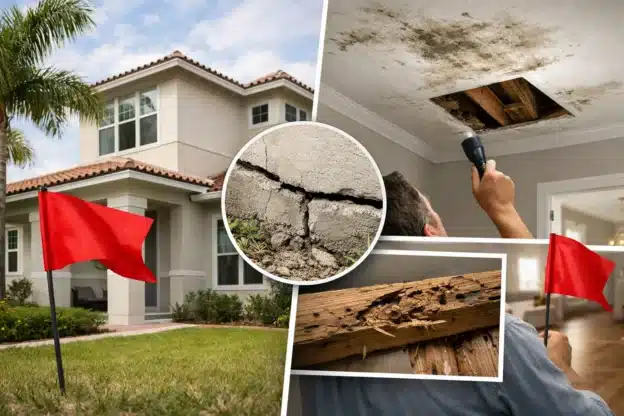
A home inspection report can contain dozens of notes, and not every item deserves the same level of concern. The top red flags after inspection are the findings that can affect safety, insurability, major repair costs, or your ability to enjoy the home as expected. Knowing the difference helps buyers make informed decisions instead of reacting to every minor defect in the report.
In Southwest Florida, that distinction matters even more. Heat, humidity, heavy rain, wind exposure, and insurance requirements can turn a manageable issue into an expensive priority. A detailed inspection gives you the information you need to ask the right questions before moving forward.
Top Red Flags After Inspection That Demand Attention
Roof damage, active leaks, or limited remaining life
A roof is one of the first areas buyers should evaluate closely. Missing or damaged coverings, failed flashing, deteriorated sealants, soft areas, active leakage, or visible water staining can point to a larger problem than a simple repair.
The age and condition of the roof also matter for insurance. Even when a roof is not currently leaking, an older roof or one with widespread wear may affect the availability or cost of coverage. Ask for clarification on whether the concern appears localized or whether the condition is widespread. A qualified roofing contractor can provide a repair or replacement estimate when the inspection findings warrant further evaluation.
A small repair near a vent or roof penetration may be reasonable. Broad deterioration, repeated repairs, or evidence of moisture intrusion below the roof covering requires a more careful look at the total cost of ownership.
Electrical safety concerns
Electrical findings deserve prompt attention when they involve safety hazards, outdated components, or improper installation. Examples include damaged service equipment, exposed wiring, missing protection at outlets near water, double-tapped breakers, overheating indicators, or panels with known performance concerns.
Not every electrical note means the entire system needs replacement. Some corrections are straightforward for a licensed electrician. However, a service panel issue, unsafe wiring condition, or evidence of amateur alterations can create a significant expense and may become an insurance concern.
Buyers should focus on the scope of the finding. Is the issue limited to one outlet, fixture, or circuit? Or does it point to a broader condition throughout the home? The inspection report should help distinguish between those situations and document the visible conditions with photos.
Moisture intrusion and signs of hidden damage
In Florida homes, moisture is never a finding to dismiss. Stains on ceilings or walls, damaged baseboards, bubbling finishes, elevated moisture readings, deteriorated trim, or unusual conditions around windows and doors can indicate water has entered the building envelope.
The source is the key question. Moisture may come from a roof issue, plumbing leak, exterior opening, failed flashing, or HVAC condensation concern. A thermal infrared camera and moisture detection tools can help identify areas that need closer evaluation, including conditions not obvious during a visual walkthrough.
Some moisture findings are old and dry, particularly after a repair. Others are active and may be causing ongoing damage behind finished surfaces. Before the end of an inspection period, buyers should understand whether the area is currently wet, what may be causing it, and what repairs are needed to correct the source rather than only the visible damage.
Foundation, framing, or structural movement
Cracks are common in many homes, and a crack alone does not automatically mean structural failure. What matters is the pattern, location, width, movement, and related symptoms. Cracks that are stair-stepped in masonry, widening, displaced, or paired with sloping floors, sticking doors, separated trim, or visible framing concerns deserve further review.
Settlement can occur over time, but ongoing movement is different from an old cosmetic crack. A qualified structural professional may be needed when the inspection identifies signs of significant movement or potential structural deficiency. That additional opinion can protect a buyer from guessing at a repair that may be far more involved than it first appears.
HVAC systems near the end of service life
Air conditioning is not a convenience in Southwest Florida. It is a major part of the home’s comfort, moisture control, and monthly operating costs. An older system may still be cooling on inspection day, but age, poor maintenance, corrosion, damaged ductwork, refrigerant concerns, drainage issues, or weak performance can signal a costly near-term replacement.
The report may identify whether the system responded to normal controls and whether visible components appeared serviceable at the time of inspection. It cannot predict exactly how long equipment will operate. Still, buyers should pay close attention when the system is approaching or beyond its typical service life, especially if it shows performance or maintenance concerns.
A professional HVAC evaluation can provide useful information about repair needs, expected remaining life, and replacement options. This is particularly valuable when several systems serve a larger home, duplex, or multi-unit property.
Plumbing leaks and water damage around fixtures
Visible leakage below sinks, around toilets, at supply lines, under tubs, or near water-heating equipment should be addressed before closing. Small drips can damage cabinetry, flooring, and wall materials over time. Corrosion, improper connections, slow drainage, and evidence of past leakage may also point to repairs beyond the visible fixture.
Water-heating equipment deserves special attention. Its age, installation, safety components, condition, and signs of leakage can affect both repair planning and insurance discussions. A unit that is functioning today may still be nearing the end of its useful life.
The practical question is whether the defect is isolated or part of a larger pattern. One worn supply line is different from multiple leaks, widespread corrosion, or recurring moisture conditions in several areas of the home.
Exterior conditions that let water in
The exterior of a home is its first line of defense against weather. Damaged siding or stucco, open joints, failed caulking, deteriorated window seals, poor drainage, and damaged soffits can create paths for moisture intrusion.
Florida storms make these details especially important. Water does not need a large opening to cause trouble. Over time, a poorly sealed window or a cracked exterior finish can allow moisture into wall assemblies, where damage may remain hidden until it becomes more extensive.
A thorough inspection examines accessible exterior components and identifies conditions that need maintenance, repair, or further evaluation. Drone-mounted cameras can also provide a better view of roof and exterior areas that are not safely accessible from the ground.
How to Respond Without Overreacting
An inspection report is not a pass-or-fail scorecard. Nearly every home, including newer construction, will have maintenance needs and defects. The goal is to separate routine ownership tasks from findings that may change your financial decision.
Start by grouping concerns into three categories: safety issues, major repair or replacement costs, and conditions that could affect insurance or cause progressive damage. Then ask for estimates from qualified contractors when a finding is beyond routine repair. Your real estate professional can help you consider repair requests, credits, price adjustments, or whether the scope of work changes the value of the purchase for you.
Timing matters. During your inspection period, focus first on active leaks, electrical hazards, roof concerns, structural indicators, and major system deficiencies. Cosmetic repairs and ordinary maintenance can still be useful negotiating points, but they should not distract from conditions that could create immediate risk or substantial expense.
Why Clear Documentation Makes a Difference
A useful inspection report does more than list defects. It explains what was observed, identifies why the condition matters, includes supporting photos, and provides clear next steps. That documentation gives buyers a stronger basis for conversations with contractors, insurers, sellers, and real estate professionals.
West Coast Home Inspection uses detailed reporting and advanced inspection technology to help clients see the condition of a property clearly. The purpose is not to create unnecessary alarm. It is to provide practical information so you can make a confident decision based on the home in front of you.
A home with inspection findings is not necessarily a home you should walk away from. The right home may still need repairs. What matters is having a clear view of the work ahead, the likely cost, and whether that responsibility fits your plans before you commit.