


A stain at the edge of a ceiling, a hairline crack near a window, or an air handler that runs but does not cool properly can change the terms of a property decision. An experienced home inspector knows these details are rarely isolated. They are clues that deserve a careful look at the home’s systems, construction, maintenance history, and exposure to Southwest Florida’s heat, humidity, wind, and rain.
For buyers, sellers, and property owners, an inspection is not just a box to check before closing. It is a practical assessment of the property’s current condition, with clear information to support the next decision.
What an Experienced Home Inspector Brings to the Process
Experience changes the inspection process because it builds pattern recognition. A newer inspector may see an issue. A seasoned professional is more likely to recognize how that issue connects to other conditions in the home, where to look next, and how to explain the concern in plain language.
For example, moisture discoloration may be related to a roof penetration, plumbing leak, condensation at an HVAC component, or past water intrusion that has already been repaired. The visible mark alone does not tell the full story. The surrounding materials, attic conditions, exterior details, moisture readings, and thermal imaging results can provide a more complete picture.
That does not mean every concern has a simple answer or that a visual inspection can predict every future repair. Homes are complex, and many components are concealed behind finished walls, ceilings, flooring, or furnishings. A qualified inspector works within the limits of a non-invasive inspection while documenting observable conditions, identifying material concerns, and recommending further evaluation when a specialist is warranted.
The Details That Matter in Southwest Florida Homes
Southwest Florida homes face conditions that deserve local knowledge. Strong sun, high humidity, heavy rain, salt air near the coast, and hurricane-season winds can affect roofing, exterior finishes, windows, doors, drainage, electrical components, and HVAC equipment differently than they might in another region.
Roofing and exterior protection
A roof is more than shingles, tiles, or metal panels. An inspection considers visible roof-covering conditions, flashings, penetrations, drainage components, and signs of past or active moisture intrusion. Exterior walls, soffits, fascia, windows, doors, and attached structures also deserve close attention because they work together to protect the interior.
Wind mitigation documentation can be especially useful for Florida homeowners seeking insurance-related information. Features such as roof-to-wall connections, roof deck attachment, opening protection, roof geometry, and secondary water resistance may affect available insurance credits. The value depends on the home’s construction and the insurer’s current standards, but accurate documentation gives owners a stronger starting point.
Moisture and HVAC performance
Humidity places constant pressure on a home. Small drainage problems, aging sealants, poorly managed condensation, and air-conditioning concerns can lead to damage that is not immediately obvious during a walk-through.
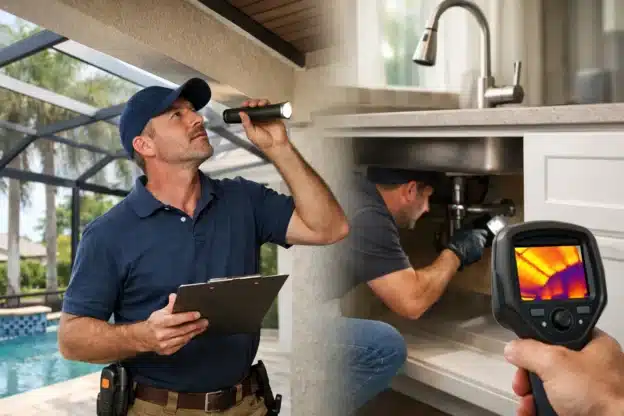
An experienced inspector uses moisture detection tools and thermal infrared cameras to look beyond what the eye can see. These tools are valuable because they can point to temperature differences or elevated moisture readings that call for closer evaluation. They are not magic devices, and a thermal image alone is not a diagnosis. In capable hands, however, they add useful evidence to the inspection and help focus attention where it belongs.
HVAC observations matter for comfort, energy use, and moisture control. The inspection can identify visible concerns with the equipment, distribution system, condensate management, and general operation at the time of the appointment. If performance, age, or condition raises questions, a licensed HVAC contractor may be the right next call.
Electrical, plumbing, and safety concerns
Electrical and plumbing systems often reveal the difference between a home that has been consistently maintained and one that has accumulated deferred repairs. Inspectors look for accessible panel conditions, wiring concerns, visible plumbing leaks, water heater issues, fixture operation, and other conditions that may affect safety or function.
The goal is not to alarm a buyer with a long report. A thorough report should distinguish between routine maintenance, items that merit repair, and concerns that require prompt attention. Context matters. A loose handrail and an active leak are both reportable, but they do not carry the same urgency or likely cost.
Technology Supports the Inspection, Not the Other Way Around
Inspection technology should make the report more useful, not make the process feel complicated. Thermal cameras, moisture meters, and drone-mounted cameras can help document areas that are difficult to assess from the ground or from accessible interior spaces.
Drone imagery can be particularly helpful when roof height, pitch, or site conditions limit close viewing. It gives the inspector another perspective on visible roof and exterior conditions without putting anyone at unnecessary risk. Still, technology has limits. Weather, access, obstructions, and the condition of the property can affect what can be observed during any inspection.
At West Coast Home Inspection, advanced tools are included as part of a thorough inspection approach, not presented as an upgrade a client must purchase to receive careful service. The priority remains clear documentation, sound judgment, and direct communication.
A Detailed Report Should Help You Act
A report has real value when a client can understand it after the inspection appointment is over. Clear photos, plain-language descriptions, and practical recommendations help buyers discuss repairs with their real estate agent, seller, contractor, insurer, or lender.
For a buyer, the report can support repair negotiations, price discussions, or a decision to seek additional expert evaluation. For a seller, a pre-listing inspection can reveal issues before a buyer finds them, giving the seller more control over timing and repairs. For owners approaching the end of a builder warranty period, an inspection can document concerns while there is still time to request correction.
The best report is not necessarily the one with the most pages. It is the one that accurately records what was observed, provides enough context to prioritize concerns, and gives the client a sensible path forward.
Questions Worth Asking Before You Schedule
Choosing an inspector is a trust decision. Credentials matter, but so does how the inspector works with clients. Ask whether the inspector is qualified for the type of property involved, whether the report includes photographs, how quickly it will be delivered, and whether the inspector welcomes questions during and after the appointment.
Property type also matters. A condo inspection can involve different considerations than a single-family home because some exterior components or shared systems may fall under association responsibility. A duplex or multi-unit property requires a broader look at multiple living areas and systems. New construction deserves an independent review as well, even when the home is newly built and looks finished.
A Certified Master Inspector and Certified Professional Inspector brings recognized training and a professional framework to the job. Just as important, the inspector should communicate findings without pressure, speculation, or confusing jargon.
The Right Time to Get an Inspection
Most buyers schedule an inspection during the contract inspection period, but that is not the only useful time. Sellers can schedule before listing. Homeowners can schedule before a warranty deadline, after a major storm, or when they notice recurring moisture, comfort, or maintenance concerns. Insurance-related 4-point and wind mitigation inspections may also be needed for policy underwriting or renewal.
Timing affects what you can do with the information. Earlier inspections generally provide more options, whether that means planning repairs, gathering contractor estimates, requesting documentation, or making a more informed purchase decision.
A home does not need to be perfect to be a good purchase. What matters is having a clear view of its condition, understanding which items need attention, and moving forward with the confidence that comes from reliable information.