


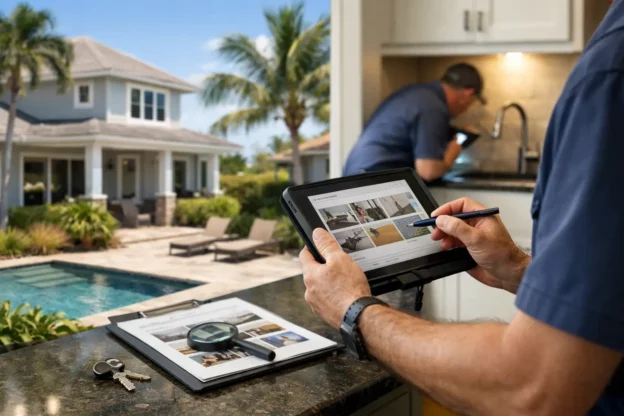
A home inspection can take several hours, but the report is what guides the next decision: move forward, request repairs, plan maintenance, or reassess the purchase. The best home inspection report features turn a long list of observations into clear, usable information – especially when a Southwest Florida property may face moisture, wind, heat, and insurance-related questions.
A good report should do more than confirm that an inspector visited the home. It should show what was inspected, explain what was found, document conditions with meaningful photos, and help you understand which items deserve prompt attention. For buyers, that clarity can shape negotiations. For sellers, it can help prevent surprises after listing. For homeowners, it creates a practical reference for protecting a major investment.
Best Home Inspection Report Features for Clear Decisions
The first quality to look for is organization. A report should be easy to navigate by system, such as roof, exterior, electrical, plumbing, heating and cooling, interior, attic, insulation, and structure. When conditions are grouped logically, you can quickly see how an issue relates to the rest of the home rather than hunting through pages of disconnected notes.
Just as important, the report should distinguish between a major concern, a repair recommendation, a safety issue, and routine maintenance. Not every finding has the same urgency. A worn weather seal and an active moisture condition should not appear to carry equal weight simply because both are listed as defects.
Clear language matters here. Technical details are necessary, but the report should explain the condition in terms a homeowner can understand. It should identify the location, describe what was observed, state why it matters when appropriate, and recommend the next reasonable step. In many cases, that step is further evaluation or repair by a qualified contractor in the relevant trade.
A concise summary that does not hide the details
A summary section is useful when it helps clients identify higher-priority items quickly. It is less useful when it replaces the body of the report. The strongest reports provide both: a focused summary for decision-making and complete system-by-system documentation for context.
For example, a summary may flag roof damage, an electrical concern, evidence of moisture, or a non-functioning cooling component. The detailed section should then show where the condition was found, include photos, and explain the observation. This gives your real estate agent, contractor, insurer, or seller a reliable starting point for the next conversation.
Photos That Show the Condition and Location
Photos are among the most valuable features in an inspection report because they reduce confusion. A written note that says “damaged flashing observed” is helpful. A photo that shows the affected area, with a caption explaining its location and condition, is far more actionable.
Look for photos that are relevant, sufficiently clear, and connected directly to the observation. Wide-angle images can establish location, while close-up images can show the defect itself. Captions should identify what you are seeing without forcing you to guess why the photo was included.
Photo documentation is particularly useful in Florida homes, where roof coverings, exterior openings, drainage, and signs of water intrusion can have meaningful implications. It also gives buyers a record of the property’s condition at the time of inspection, which is valuable when planning repairs after closing.
Technology should support the visual record
Some conditions are not obvious from a standard visual review alone. Moisture detection equipment and thermal infrared cameras can help identify areas that warrant closer attention, such as temperature differences or possible moisture patterns behind finished surfaces. Drone-mounted cameras can also assist with viewing areas of a roof that are difficult to access safely from the ground.
These tools are valuable when used correctly. They do not replace a trained inspector’s judgment, and an infrared image alone does not diagnose the cause of a condition. Their role is to provide additional information that supports a more complete assessment and better documentation.
Specific, Action-Oriented Recommendations
A useful report does not leave clients wondering what to do with a finding. Recommendations should be specific enough to support action without crossing into contractor pricing or repair design. For instance, “Have a qualified electrician evaluate and repair the noted condition” is more useful than “electrical issue present.”
The report should also be measured in its language. A dependable inspector documents visible conditions and explains the implications based on what can be observed at the time of the inspection. A report that overstates every minor imperfection can create unnecessary alarm. One that minimizes significant concerns can leave a buyer without the information needed to make a sound decision.
This balance is especially important in older homes and homes that have been exposed to years of coastal weather. No property is perfect, and age-related wear is not automatically a deal-breaker. The key is understanding the difference between normal maintenance, a repair that should be addressed soon, and a condition that needs prompt professional attention.
Coverage That Matches the Property You Are Buying
The best reports make it clear what areas and systems were inspected. A condo, townhouse, manufactured home, duplex, and single-family home each present different considerations. The report should reflect the type of property and clearly state where access, ownership boundaries, or visible conditions affected the inspection.
For a condominium, for example, the interior unit may be the primary focus while certain exterior components are maintained by an association. That does not make exterior conditions irrelevant. It means the report should help the buyer understand what was visible and which questions may need to be directed to the association or property manager.
For duplexes and other multi-unit properties, the report should identify observations by unit or location whenever possible. That level of detail helps an investor or owner organize repairs, estimate maintenance needs, and communicate accurately with occupants or contractors.
Insurance and weather-related documentation
Southwest Florida buyers often have questions that extend beyond the typical purchase inspection. A clear report can support conversations about property condition, roof age or visible roof conditions, electrical components, plumbing materials, and heating and cooling equipment. Depending on the transaction, separate 4-point and wind mitigation inspections may also be needed for insurance purposes.
These are different services with different reporting requirements, so do not assume one report substitutes for another. Ask in advance what documentation is needed by your insurer or lender. Getting the right inspection services scheduled at the right time can keep the transaction moving and reduce last-minute pressure.
Fast Delivery Without Sacrificing Accuracy
Real estate timelines move quickly, but a rushed report can create more problems than it solves. The goal is timely delivery paired with complete documentation and careful review. A report delivered promptly allows buyers and their agents to discuss findings, request estimates when needed, and respond before contingency deadlines.
Communication is part of the report’s value. A quality inspector should be prepared to explain findings in practical terms after the inspection. The written report remains the formal record, but a brief conversation can help clients separate the most immediate concerns from the items that belong on a future maintenance plan.
At West Coast Home Inspection, the goal is to provide clients with detailed reporting, photo documentation, and the clear communication needed to make informed property decisions. A thorough report should leave you with fewer unanswered questions, not more.
Before scheduling, ask to see a sample report and review it from the perspective of a buyer. Can you find the significant items quickly? Do the photos explain the observations? Are recommendations clear enough to share with a contractor or agent? The report you receive after an inspection should help you move ahead with confidence and a realistic plan for the home.