


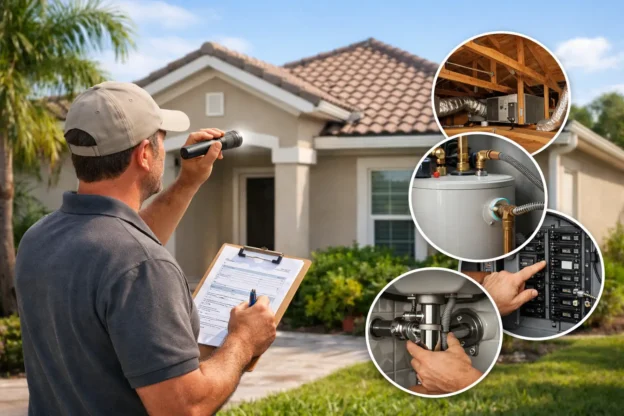
A four-point inspection can feel like a small insurance requirement until it delays a policy, changes a premium, or raises questions about a home you are buying. In Southwest Florida, where heat, humidity, storms, and aging housing systems all affect property risk, a clear Florida four point inspection guide helps homeowners understand what an insurer is asking for and why.
Unlike a full home inspection, a four-point inspection has a narrow purpose. It documents the current condition and apparent age of four major systems that insurers use to evaluate whether a property is eligible for coverage. A favorable report does not guarantee insurance approval, since each carrier has its own underwriting standards. It does give the insurer organized, current information to make that decision.
What Is a Florida Four-Point Inspection?
A four-point inspection is an insurance-focused visual evaluation of the roof, electrical system, plumbing system, and heating and air conditioning system. Insurers commonly request one for older homes, though the age threshold varies by carrier and policy type.
The inspector records visible conditions, notes deficiencies, takes supporting photographs, and completes the carrier’s required form when applicable. The report is not designed to predict every future repair or replace the broader due diligence of a pre-purchase home inspection. It is a focused snapshot of the systems most closely tied to insurance losses.
For a buyer, this distinction matters. A property may satisfy an insurer’s four-point requirements while still have maintenance needs that deserve attention during the transaction. Conversely, a well-maintained older home may be insurable even when its systems are not brand new.
The Four Systems Insurers Review
Roof covering and visible roof condition
The roof section typically identifies the covering material, estimated age, visible condition, and signs of active or prior leakage when apparent from accessible areas. Insurers often pay close attention to roof age because replacement timing, storm exposure, and water intrusion can create significant claims risk.
A roof does not necessarily need to be new to receive coverage. What matters is the carrier’s guidelines, the remaining useful life indicated by condition and documentation, and whether there are visible concerns such as damaged shingles, deteriorated surfaces, unsecured materials, or evidence of leaks. If a roof has been replaced, a permit record, paid invoice, or contractor documentation may help clarify its age when the exact date is not readily available.
Electrical system
The electrical review looks at the service equipment, panel configuration, visible wiring, breakers, grounding, and apparent safety concerns. Older electrical components can trigger underwriting questions, particularly when a panel shows corrosion, overheating, improper modifications, double-tapped breakers, or other visible issues.
The report is not a code compliance certification, and an inspector does not dismantle the system or inspect wiring hidden behind walls. Still, visible conditions can be highly relevant. If the report identifies an electrical concern, an insurer may request evaluation or repair by a qualified licensed electrician before issuing or renewing coverage.
Plumbing supply, drain, and water-heating components
For plumbing, the inspection generally identifies visible supply line materials, drain materials, water heater information, and active leaks observed during the visit. Water damage claims are one reason insurers scrutinize this area closely, especially in homes with aging pipes or evidence of ongoing leakage.
An older plumbing system is not an automatic problem. Material type, visible condition, repair history, and carrier rules all affect the outcome. Homeowners should be prepared to provide documentation for repipes, water heater replacements, or completed plumbing repairs when requested. Clear records can make underwriting conversations much easier.
Heating and air conditioning
In Florida, air conditioning is more than a comfort feature. The four-point inspection documents the type, apparent condition, and approximate age of the heating and cooling equipment. Insurers generally want to confirm that the system is installed, operational when conditions permit testing, and not visibly deteriorated.
A system near the end of its expected service life may still operate properly, but it can be a practical budgeting concern for a buyer and may receive closer review from some insurers. Keeping service records is worthwhile, particularly if major components have been replaced or repaired.
What a Four-Point Inspector Does and Does Not Do
The inspection is visual and limited to readily accessible areas. The inspector may operate normal controls where appropriate, observe accessible components, photograph findings, and describe conditions relevant to the form. Moisture detection tools or thermal infrared imaging may also help identify areas that warrant further attention, depending on the scope of service and accessible conditions.
There are limits. An inspector does not move furniture, open walls, disassemble equipment, certify future performance, or guarantee insurance eligibility. The report reflects conditions visible on the day of inspection, not a lifetime history of the home.
That is why an honest report is valuable, even when it identifies a concern. Accurate documentation lets the homeowner, buyer, agent, and insurance professional address the right issue instead of relying on assumptions.
How to Prepare for a Four-Point Inspection
Preparation is straightforward and helps the appointment move efficiently. Ensure access to the electrical panel, water heater, HVAC equipment, attic access when applicable, and the exterior of the home. Remove stored items that block these areas, and make sure pets are secured.
Gather any useful documents before the inspection. Roof permits, replacement invoices, HVAC service records, electrical upgrade receipts, repiping paperwork, and water heater documentation can support the age and history of the systems. They may not change a visible condition, but they can clarify questions that arise during underwriting.
If you know of a prior repair, do not assume it is self-evident. A repaired ceiling stain, for example, may still prompt questions if there is no context. Documentation showing the source was corrected can be helpful when an insurance representative reviews the report.
Common Findings and What to Do Next
Four-point reports often identify routine maintenance items as well as conditions that may require professional attention. Common concerns include aging roof coverings, visible roof repairs, outdated or damaged electrical components, active plumbing leaks, older water heaters, and HVAC equipment with visible deterioration.
The right next step depends on the finding and the insurer’s response. Some items may only require an explanation or additional documentation. Others may require repair, replacement, or a letter from a qualified contractor. Buyers should discuss material findings with their real estate agent and consider the repair cost, timeline, and effect on insurance options before their inspection period ends.
Sellers can benefit from having a four-point inspection completed before listing when the property is older or likely to raise insurance questions. Early information gives the seller time to gather records or complete needed work rather than facing a last-minute issue after a buyer is under contract.
Four-Point Inspection vs. Wind Mitigation Inspection
These two services are often requested together, but they serve different purposes. A four-point inspection focuses on the condition of the roof, electrical, plumbing, and HVAC systems for insurance eligibility. A wind mitigation inspection documents construction features that may reduce wind damage, such as roof-to-wall connections, roof deck attachment, opening protection, and secondary water resistance.
A wind mitigation report may support insurance discounts when qualifying features are present. A four-point report addresses a carrier’s comfort with the age and condition of key systems. One does not replace the other.
Choosing the Right Inspection Partner
Because the report may influence your ability to bind or renew coverage, accuracy and communication matter. Look for an experienced, properly qualified inspector who understands Florida insurance forms, provides clear photo documentation, and is available to explain the findings in plain language.
At West Coast Home Inspection, detailed reporting and responsive communication are central to the process. For homeowners and buyers in Fort Myers, Cape Coral, Naples, and nearby Southwest Florida communities, a timely four-point inspection can provide the documentation needed to keep an insurance decision moving forward.
A four-point inspection is best treated as useful property information, not just another closing task. Schedule it early, keep your repair records organized, and give yourself enough time to respond thoughtfully if the report identifies a condition that needs attention.