


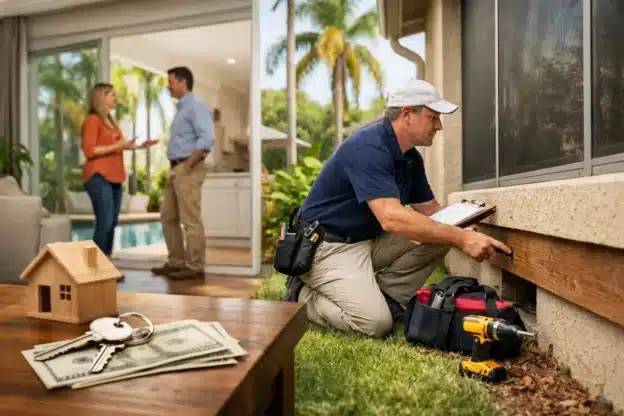
A home inspection report can change the tone of a real estate transaction quickly. Once significant findings appear, the question becomes: who pays inspection repairs? In most Southwest Florida home sales, there is no automatic answer. The signed contract, the inspection findings, local market conditions, and each party’s willingness to negotiate determine what happens next.
A thorough inspection gives buyers and sellers facts to work from. It does not require a seller to make repairs or require a buyer to proceed with the purchase. That distinction matters. The inspection period is a time to identify material concerns, understand likely costs, and make clear decisions before the transaction moves forward.
Who Pays Inspection Repairs? It Depends on the Contract
In a typical Florida transaction, the purchase agreement controls the parties’ rights and obligations. Many residential contracts include an inspection period during which the buyer can inspect the property and decide whether to continue, renegotiate, or terminate under the terms of the agreement.
When a property is sold “as is,” the seller is generally not agreeing in advance to repair every issue found during the inspection. The buyer may still request repairs, a price reduction, or a closing credit. The seller can agree, decline, or make a counterproposal. If the parties cannot reach acceptable terms, the buyer’s options depend on the deadlines and language in the contract.
Other contracts may contain specific repair provisions, dollar limits, or standards for what the seller must address. Buyers and sellers should read those provisions carefully and rely on their real estate agent and attorney for contract guidance. A verbal promise is not a substitute for a written, signed agreement.
Inspection Findings Are Not All Equal
No home is perfect, including a newly constructed home. A professional report may document maintenance needs, minor defects, aging components, and conditions that deserve monitoring. Trying to negotiate every item can slow the process and distract from concerns that have a meaningful effect on safety, function, cost, or insurability.
The strongest repair requests usually focus on significant conditions, such as an active roof leak, electrical hazards, plumbing leaks, moisture intrusion, unsafe structural conditions, malfunctioning major systems, or issues that may affect a lender or insurer. In Southwest Florida, roof condition, wind-related protections, electrical systems, and visible moisture concerns often receive close attention because of the region’s weather exposure and insurance environment.
Cosmetic wear, loose hardware, small drywall cracks, older-but-operating appliances, and routine upkeep are usually treated differently. They may still matter to a buyer, but they are less likely to justify a major concession unless they point to a larger underlying issue.
A detailed report with photographs, clear descriptions, and locations helps everyone distinguish between a minor maintenance item and a condition requiring prompt attention. That clarity is one reason a comprehensive inspection is valuable before negotiations begin.
The Three Most Common Repair Solutions
Once a buyer identifies the findings they want addressed, buyers and sellers usually reach one of three arrangements.
The first is seller-paid repair work before closing. This can work well when the issue is straightforward and the seller can hire a qualified contractor promptly. For example, a seller may agree to correct a documented leak, repair an unsafe electrical condition, or service a system that is not operating as intended. Buyers should request documentation and receipts, and the agreement should state exactly what work will be completed.
The second option is a closing credit. Rather than managing repairs before moving, the seller contributes an agreed amount toward the buyer’s closing costs, when permitted by the buyer’s loan terms. A credit gives the buyer more control over the contractor and timing after closing. However, lender limits can affect how much credit is usable, and a credit does not fix an issue that must be resolved before a loan or insurance policy can move forward.
The third option is a price reduction. This may be practical when repairs are substantial or when the buyer prefers to handle the work after closing. A lower purchase price can be useful, but it does not place cash in the buyer’s pocket at closing in the same way a credit can. Buyers should understand the financial difference before choosing this route.
Sometimes the best outcome is a combination: the seller completes one urgent repair, then provides a modest credit for less immediate work. There is no single approach that fits every home or every buyer’s financing situation.
Why Sellers May Agree to Repairs
Sellers are not necessarily admitting fault when they agree to a repair request. Often, they are making a practical business decision. A serious finding could come up again with the next buyer, particularly if it involves an active leak, an unsafe condition, or a major component that is not functioning properly.
A seller may also want to protect the closing timeline. If the buyer is well qualified, the agreed price is fair, and the request is reasonable, resolving a documented concern can be less costly than putting the home back on the market.
That said, sellers have valid reasons to limit what they agree to pay. A seller may have priced the home with its age or condition in mind, may receive competing offers, or may believe the buyer’s request goes beyond the findings. In a seller-favorable market, buyers may have less leverage. In a market with more inventory or a longer listing period, sellers may be more open to concessions.
How Buyers Should Make a Strong Repair Request
A repair request is more effective when it is focused, timely, and tied directly to the inspection report. Buyers should resist sending a long list of every minor item found. That approach can make it harder to resolve the matters that truly affect the purchase decision.
Start with the conditions that create a meaningful concern: safety, water intrusion, major system performance, structural integrity, or potential insurance and financing complications. Ask for a specific resolution when possible. “Repair active leak at the supply connection beneath the kitchen sink” is clearer than “fix plumbing.”
Buyers should also respect the inspection deadline. Waiting until the final day can leave little time for productive discussion, contractor estimates, or follow-up questions. A prompt request gives both parties more room to reach a fair agreement.
If a seller agrees to repairs, the written addendum should identify the work, state who will perform it, and clarify whether invoices, permits, warranties, or proof of completion are required. For larger concerns, a reinspection before closing may be appropriate to confirm that the agreed work was completed and that the visible condition has been addressed.
Sellers: Prepare Before the Inspection Happens
The best time to think about repair responsibility is before a buyer schedules an inspection. A pre-listing inspection can help sellers identify material concerns early, decide what to address, and price the home with better information. It also reduces the chance of discovering a major issue after the property is under contract.
Sellers should make the home accessible for the inspection. Clear access to the electrical panel, attic entry, mechanical equipment, plumbing fixtures, and exterior areas supports a complete evaluation. Repairing known active leaks, replacing missing safety components, and addressing obvious deferred maintenance beforehand can help keep negotiations centered on the home rather than preventable surprises.
For homes in Fort Myers, Cape Coral, Naples, and surrounding Southwest Florida communities, insurance-related documentation can also be valuable. A current 4-point inspection or wind mitigation inspection may help clarify the condition and protective features of the home for buyers who are coordinating coverage.
Keep the Inspection in Its Proper Role
An inspection is not a pass-fail grade and it is not a contractor bid. It is an objective evaluation of the home’s visible and accessible conditions at the time of the inspection. The report gives buyers, sellers, and their agents a reliable foundation for decisions, but the transaction itself remains a negotiation.
West Coast Home Inspection provides detailed reporting, photo documentation, moisture detection, thermal imaging, and other advanced tools to help clients see the property more clearly. When the report identifies a concern, clear evidence makes a calm, businesslike conversation far easier.
The right repair agreement is the one that reflects the property’s condition, the contract, the buyer’s financing and insurance needs, and both parties’ priorities. Keep requests focused on meaningful findings, put every agreement in writing, and give the transaction enough time for careful decisions.