


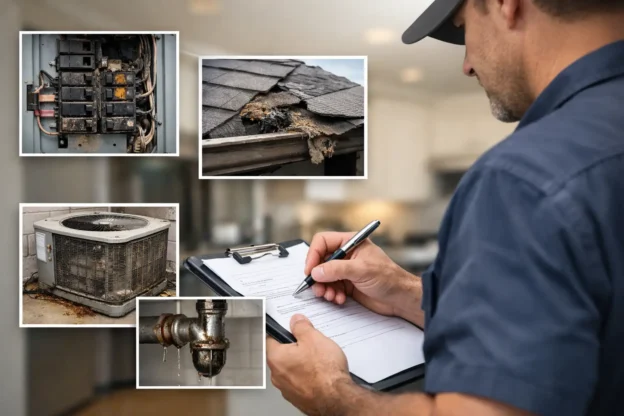
A home can look clean, well-kept, and move-in ready – then still raise red flags on a 4-point inspection. That surprises a lot of buyers and homeowners, especially when they first ask what fails a 4 point inspection and assume the answer is only major damage. In reality, many failed reports come down to age, condition, safety concerns, or signs that one of the home’s core systems is no longer reliable enough for an insurance carrier.
A 4-point inspection is narrower than a full home inspection. It focuses on four areas the insurance industry pays close attention to: the roof, electrical system, plumbing system, and HVAC system. The goal is not to grade the whole house. It is to document whether these major systems appear to be in acceptable condition and whether they present an elevated risk of future claims.
What fails a 4 point inspection most often?
Most issues that fail a 4-point inspection fall into one of two categories. Either the system is too old and near the end of its service life, or the inspector finds visible defects that suggest the system is unsafe, leaking, damaged, or poorly maintained.
Insurance carriers are not all identical in how they review a report. One company may be more flexible on an aging water heater or older air conditioner, while another may focus heavily on roof age or specific electrical panel brands. That is why a home does not always “fail” in the same way across every insurer. Still, there are common problems that cause delays, repairs, or denial of coverage.
Roof issues that can fail a 4-point inspection
The roof is one of the biggest concerns because it protects everything beneath it. If a roof is nearing the end of its useful life, insurance companies may see it as a high claim risk even if it is not actively leaking on the day of the inspection.
Common roof-related failures include missing or damaged shingles, cracked tiles, soft spots, sagging areas, exposed underlayment, patchwork repairs, and visible signs of active leaks. Water stains on ceilings can also trigger concern because they suggest the roof may already be allowing moisture intrusion.
Age matters too. In Florida, insurers often pay close attention to older roofs due to weather exposure, heat, and storm risk. A roof might not be collapsed or visibly failing, but if it appears too worn or too old to provide dependable service, that alone can affect insurability.
It also helps to understand the difference between a roof that is imperfect and a roof that is unacceptable for insurance. A few cosmetic blemishes may not be a problem. Evidence of deterioration, storm damage, prior leaking, or very limited remaining life usually is.
When roof age becomes the real issue
A roof can look decent from the ground and still create a problem on a 4-point report. Inspectors document visible condition, but insurance underwriters also care about remaining life expectancy. If the roof appears to have only a few years left, a carrier may request replacement before issuing or renewing coverage.
This is especially common with older shingle roofs and aging flat or low-slope sections. Homes in Southwest Florida can take a beating from sun, heavy rain, and wind, so roofs tend to get extra scrutiny.
Electrical problems that raise immediate concern
Electrical failures tend to be about fire risk. If the system shows signs of unsafe components, improper repairs, or outdated equipment, the report can become a major obstacle.
The most common electrical issues include double-tapped breakers, open junction boxes, exposed wiring, scorched conductors, missing panel covers, and evidence of overheating at the panel or service equipment. Older wiring types can also create problems, especially if they are known to have higher failure rates or insurance concerns.
Certain electrical panels are flagged more often than others because of documented reliability issues. Likewise, aluminum branch wiring may draw underwriting concern depending on the age of the home, whether proper remediation has been completed, and the carrier’s guidelines.
A home does not need to have lights flickering or outlets not working to fail in this area. Sometimes the issue is found at the panel, in the attic, or at visible connection points. That is why a system can seem functional to the homeowner while still being considered a risk.
Panels and wiring insurers often question
This is where details matter. Some older panels and wiring methods are not automatically unsafe in every case, but they are often viewed unfavorably by insurers. If the panel brand has a history of failures, or the wiring type is associated with overheating concerns, the insurance company may ask for repairs, replacement, or additional evaluation.
That does not mean every old electrical system must be fully upgraded. It means the condition, documentation, and insurer’s standards all come into play.
Plumbing defects that can fail a 4-point inspection
Plumbing concerns are usually tied to leaks, water damage, and the likelihood of a pipe failure. Even a small leak under a sink can matter because insurers know that minor leaks often point to bigger maintenance issues.
Common plumbing failures include active leaks, corroded pipes, poor water heater condition, deteriorated supply lines, evidence of past water damage, and materials that insurers may consider high risk. Older polybutylene piping is a frequent example. Some carriers are hesitant to insure homes with it because of its failure history.
Water heaters also receive attention. If a unit is leaking, heavily rusted, improperly installed, or beyond its expected service life, it may be cited. The issue is not just whether hot water works. The issue is whether the equipment appears likely to fail and cause damage.
Small leaks are not always small problems
Homeowners sometimes assume a drip under a bathroom sink or slight corrosion at a shutoff valve will not matter. On a 4-point inspection, visible plumbing leaks matter because they show the system is not fully sound at the time of inspection. In the insurance world, a small leak can turn into a large claim quickly.
HVAC issues that can fail a 4-point inspection
The heating and cooling system is another major area. In Florida, air conditioning is not a luxury item – it is a core system, and insurers want to know whether it is operational and in reasonable condition.
Common HVAC failures include systems that do not cool properly, units with severe rust or deterioration, damaged air handlers, missing components, unsafe wiring at the condenser, and signs that the equipment has not been maintained. If the system is clearly beyond its serviceable life or not functioning as intended, that can affect the report.
In some cases, the issue is not total failure but visible condition. A very old system with heavy corrosion, poor performance, or makeshift repairs may be viewed as unreliable even if it still runs.
What fails a 4 point inspection besides the four systems?
Technically, the inspection is centered on those four systems, but related signs of damage can still matter. For example, interior water stains may support a roof concern. Moisture damage around plumbing can reinforce leak findings. Unsafe conditions around electrical equipment may be noted because they directly affect one of the four required categories.
This is also where experience matters. A disciplined inspector is not looking for ways to sink a transaction. The job is to document the actual condition clearly, with photos and accurate notes, so the homeowner, buyer, and insurer understand what needs attention.
Can you pass after repairs?
Often, yes. A 4-point issue is not always the end of the road. Many homes that initially have problems can move forward after repairs are completed and documented. Replacing a damaged water heater, repairing a roof leak, correcting unsafe wiring, or addressing an HVAC defect can be enough to satisfy the insurer.
Timing matters, though. If you wait until the last minute, even simple repairs can create closing delays or insurance headaches. That is why proactive inspections are useful for sellers and homeowners, not just buyers. Knowing where the trouble spots are gives you time to fix them on your schedule instead of the insurer’s.
How to avoid surprises before the inspection
The best approach is straightforward. Make sure all four systems are accessible, address known leaks and electrical hazards, service aging HVAC equipment, and gather records for major updates if you have them. If the roof, water heater, panel, or plumbing has been replaced, documentation can help support the home’s insurability.
It is also smart to go in with realistic expectations. A 25-year-old roof or heavily corroded air conditioner may become an issue even if it still works. A 4-point inspection is about risk, not just function.
For homeowners in places like Fort Myers, Cape Coral, and Naples, that risk assessment is shaped by Florida’s insurance market and weather exposure. The standard is often tighter than people expect.
A careful 4-point inspection gives you something useful, even when it uncovers a problem. It shows where the real risks are, what may need repair, and what questions to solve before insurance becomes the obstacle instead of the next step.