


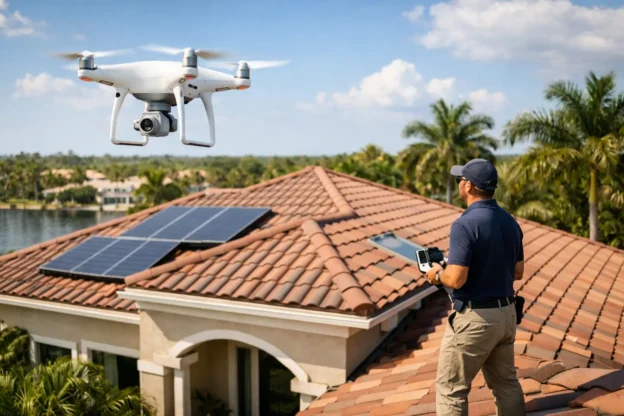
A roof can look acceptable from the driveway and still have conditions that deserve a closer look. This drone roof inspection review explains where aerial imaging adds real value during a residential inspection, what it can reveal, and why the images still need to be interpreted by an experienced inspector.
For Southwest Florida buyers, sellers, and homeowners, the roof is more than a line item on a report. It is a major defense against intense sun, wind-driven rain, tropical weather, and moisture intrusion. A detailed roof evaluation can affect negotiations, repair planning, insurance conversations, and the confidence to move forward with a property.
What a Drone Roof Inspection Actually Adds
A drone-mounted camera gives an inspector a clear overhead perspective that is difficult to obtain from the ground. It can safely capture high-resolution images of roof fields, ridges, valleys, flashing areas, penetrations, gutters, and transitions where different roof sections meet.
This matters when a roof is steep, high, fragile, wet, or otherwise unsafe to walk. Rather than relying on a distant visual estimate, the inspector can review images that show the actual condition of many roof surfaces. The client receives useful photo documentation instead of a vague statement that the roof was viewed from below.
Aerial images are especially helpful on homes with complex rooflines. Multiple elevations, dormers, pool cages, landscaping, solar equipment, and tight lot spacing can limit what is visible from a ladder or the ground. A drone can document broad roof areas efficiently while helping the inspection remain focused and safe.
Drone Roof Inspection Review: What Inspectors Look For
The value of the drone is not simply that it flies. The value comes from pairing the camera’s view with a methodical inspection process and professional judgment. Roof images can help identify visible conditions that may warrant repair, further evaluation, or closer monitoring.
Common observations may include cracked, displaced, curled, missing, or deteriorated shingles; worn or damaged tile; exposed underlayment; loose ridge materials; and staining patterns that suggest water has been moving where it should not. On metal roofs, the review may focus on panel alignment, fasteners, flashing, seams, and areas of visible corrosion or coating wear.
The camera can also document debris accumulation in valleys, damaged roof vents, worn pipe boots, compromised flashing, and irregular repairs. These smaller components often matter because water tends to enter around openings, transitions, and penetrations rather than through the center of an otherwise sound roof surface.
In Florida, wind-related damage deserves special attention. Aerial photography can reveal missing or lifted materials, uneven roof edges, damaged ridge caps, and other visible signs that may not be obvious from the street. It does not determine the cause or age of every condition, but it gives buyers and owners a better record of what was visible on the day of inspection.
What a Drone Cannot Tell You by Itself
Aerial inspection is a strong tool, not a replacement for a complete home inspection. Even sharp images cannot confirm every condition beneath the roofing material. They cannot determine the remaining service life of a roof with certainty, verify installation quality in every concealed area, or rule out hidden moisture intrusion.
That is why a qualified inspector evaluates the roof as part of the larger home. Interior ceilings, attic areas when accessible, exterior wall surfaces, visible flashing, drainage patterns, and moisture indicators can all provide context. A thermal infrared camera or moisture detection tool may help identify conditions that call for additional review, but those tools also require proper interpretation.
The best approach combines aerial imagery with ground-level observations and accessible interior evaluation. A report should clearly separate what was observed from what could not be accessed or verified. That level of clarity helps clients make decisions based on facts rather than assumptions.
When Drone Imaging Is Most Helpful
Drone imaging is particularly useful when direct access would create unnecessary risk or could damage the roof covering. Tile roofs are a good example. Walking on certain tile systems can crack materials or create concerns that were not present before the inspection. The same is true for very steep roofs, roofs with wet surfaces, and aging roofs that appear fragile.
It is also valuable during a pre-listing inspection. Sellers can see documented roof conditions before the home goes on the market and decide whether repairs, maintenance, or further evaluation make sense. Addressing a visible issue early can reduce surprises after a buyer’s inspection and support a more straightforward transaction.
For buyers, drone images provide a useful reference when reviewing the inspection report. Instead of trying to picture a concern described in technical language, they can see the affected area. This is often helpful when discussing repair requests with an agent, seller, roofer, insurer, or property manager.
Owners who are not currently selling can benefit as well. After a major storm or when planning maintenance, aerial images can help document visible roof conditions without climbing a ladder. If the inspection reveals a concern, the next step may be to consult a qualified roofing contractor for repair recommendations and cost estimates.
The Difference Between Images and a Useful Report
Photos alone are not an inspection report. A useful report connects each image to a specific observation, identifies the area involved, explains why the condition matters, and provides practical next steps when appropriate.
For example, a photo of lifted material at a roof edge is more useful when the report identifies the location and recommends evaluation or repair by a qualified professional. A wide aerial image may establish overall context, while close-up images support the written finding. Together, they create documentation that is easier to understand and act on.
This level of detail is important in a real estate transaction, where time is limited and decisions carry financial weight. Buyers need a report that helps them prioritize concerns. Sellers need documentation that supports informed preparation. Realtors need clear information they can communicate without guessing at the meaning of an image.
At West Coast Home Inspection, drone-mounted cameras are used as part of a thorough inspection approach and are included at no additional cost. The goal is straightforward: provide clients with clear, well-documented information about the home they are considering, selling, or maintaining.
Questions to Ask About a Drone Roof Inspection
Before scheduling, ask whether aerial imaging is included when conditions warrant it, whether the report will contain labeled photos, and how quickly the report will be delivered. It is also reasonable to ask how the inspector evaluates roof areas that cannot be safely walked or directly accessed.
A good inspector will explain the scope clearly. No inspection can promise that a roof will remain trouble-free, and no aerial view can see through roofing materials. What it can do is improve visibility, reduce unnecessary risk, and give you stronger documentation of conditions visible at the time of the inspection.
For homes in Fort Myers, Cape Coral, Naples, Bonita Springs, Estero, Port Charlotte, Punta Gorda, and nearby Southwest Florida communities, that added perspective can be particularly worthwhile. Weather exposure and complex roof designs make careful observation more than a convenience.
When you review a property, do not settle for a quick glance from the curb. Clear aerial images, paired with a detailed inspection report and direct communication, give you a more reliable basis for the next decision you need to make.