


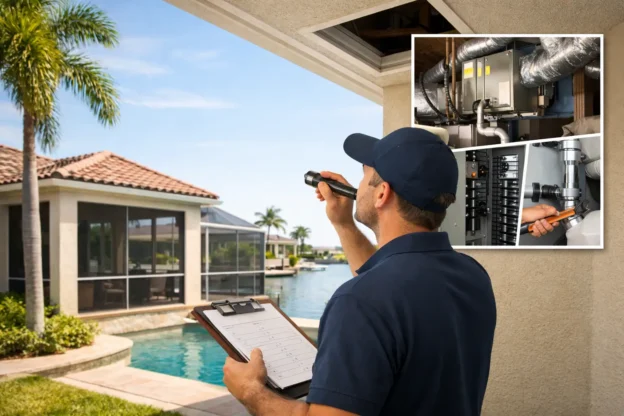
A new insurance request can bring a Cape Coral 4 point inspection to the top of your to-do list with little notice. Whether you are buying an older home, changing carriers, or responding to a renewal request, the report gives an insurer a focused look at the systems most closely tied to property claims. A clear, accurate inspection can help move the underwriting conversation forward with documented facts rather than assumptions.
A 4-point inspection is not a full home inspection, and it is not a guarantee that a policy will be issued. It is a specialized insurance inspection that reports on four major areas: the roof, electrical system, plumbing system, and heating and cooling system. In Southwest Florida, where heat, humidity, storms, and aging housing components can put extra pressure on a property, insurers often want current information before deciding on coverage or rates.
What a Cape Coral 4 Point Inspection Covers
The inspector documents the visible condition, apparent age, and major characteristics of each system. Insurance carriers may have different underwriting standards, so the purpose is to provide a factual snapshot that helps the carrier make its decision.
Roof covering and visible condition
The roof portion generally identifies the roof covering material, its approximate age, the presence of visible damage or deterioration, and signs of active leakage when visible from accessible areas. The inspector also notes the roof shape and may document conditions such as missing shingles, worn areas, cracked tiles, deteriorated flashing, or soft spots that can be observed safely.
For Cape Coral homeowners, roof documentation carries real weight. Strong sun exposure, wind-driven rain, tropical weather, and prior storm activity can affect roof condition over time. A roof does not need to look new to be insurable, but visible wear, limited remaining service life, or active concerns may lead an insurer to request repairs, further documentation, or a roof replacement before offering certain coverage.
Electrical panels, wiring, and visible components
The electrical review typically identifies the main panel manufacturer, panel capacity, visible wiring methods, grounding, breakers, and any apparent hazards. The inspection report may call attention to conditions such as corrosion, double-tapped breakers, exposed wiring, missing panel covers, or equipment with a history of insurance scrutiny.
Age alone does not always decide the outcome. The panel type, installation condition, updates made to the system, and an insurer’s individual guidelines can all matter. If the home has had electrical work performed, permits, invoices, or documentation from a qualified electrician may be useful if an underwriter asks for clarification.
Plumbing supply, drains, and water heater
Plumbing documentation usually addresses the supply line materials, visible drain and waste piping, and the water heater. The report records observable leaks, corrosion, improper discharge piping, and other visible issues around accessible fixtures and equipment.
Older supply plumbing can be a central underwriting concern because a hidden failure can cause significant water damage. A 4-point inspection does not involve opening walls or testing every inch of piping, but it can identify the materials that are visible and report evidence of leaks or deterioration. That distinction matters for homeowners who assume a quick inspection can certify every pipe inside the home.
Heating and air conditioning
In Florida, the cooling system is more than a convenience. The inspection commonly identifies the type of system, approximate age, visible condition, and whether it was operating normally at the time of inspection. The report may note rusted components, missing disconnects, damaged insulation, improper installation details, or equipment that does not respond during normal operation.
A system can cool the home and still raise questions if it is near the end of its expected service life or shows visible deficiencies. Insurers may ask for service records, repairs, or replacement based on their own requirements. The inspection report helps establish the starting point.
When Insurance Companies Request a 4-Point Report
A Cape Coral 4 point inspection is commonly requested for homes that have reached a certain age threshold, particularly when a new policy is being written or an existing policy is renewed. The exact trigger differs by carrier, the home’s age, the type of policy, and the property’s documented history.
Buyers often encounter the requirement after they are already under contract. Sellers may encounter it when a buyer’s insurer requests a report shortly before closing. Homeowners can also receive a request after changing coverage, purchasing a previously owned property, or receiving a notice from their current carrier.
Timing matters. If an insurer asks for a report, scheduling it promptly gives you more room to respond if the report identifies an item that needs attention. Waiting until the final days before a closing or policy deadline can create unnecessary pressure, especially if a contractor’s evaluation or repair is needed.
What the Inspection Does Not Tell You
A 4-point report has a specific purpose. It should not be treated as a substitute for a comprehensive pre-purchase inspection, a roof certification, a contractor’s repair estimate, or a wind mitigation inspection.
For example, the inspector may identify visible roof wear but cannot predict the exact remaining life of the roof. A plumbing review may note pipe materials and visible leakage but cannot see every concealed connection. An HVAC unit may operate during the inspection yet still need future maintenance. These are normal limits of a visual, noninvasive inspection.
If you are purchasing a home, a full home inspection provides a much broader review of accessible components and conditions. If you are pursuing potential wind-related insurance credits, a separate wind mitigation inspection documents features such as roof-to-wall connections, opening protection, and roof geometry. Both services can be valuable, but they answer different questions for different decisions.
How to Prepare for the Appointment
A little preparation helps the inspection stay efficient and gives the report a more complete factual record. Make sure the inspector can access the electrical panel, water heater, HVAC equipment, and attic access where applicable. Move stored items away from these areas, and make arrangements for pets before the appointment.
If you have records showing roof replacement, electrical upgrades, plumbing repiping, HVAC installation, or recent repairs, keep them available. The report must reflect observable conditions, but supporting documents can be helpful when an insurance agent or carrier asks about dates, permits, or equipment specifications.
Do not make cosmetic changes simply to influence the inspection. What matters is the actual condition of the systems and clear access to inspect them. If you know a repair is underway, explain that up front and provide any relevant paperwork. Transparency gives everyone a better basis for next steps.
What Happens After the Report Is Delivered
After the inspection, you receive a report with findings and photo documentation of the four systems. You can provide it to your insurance agent or carrier, who will review it against the company’s underwriting guidelines. The inspection company reports conditions; the insurer makes the coverage decision.
If the carrier requests repairs, ask for the request in writing and confirm precisely what documentation will satisfy it. Depending on the condition, that may mean a repair invoice, a contractor letter, permits, photos, or a reinspection report. Do not assume that completing a repair automatically resolves every underwriting question. Confirm the carrier’s next step before spending money on work that may not address the stated concern.
For buyers, the findings can also inform negotiations. A visible concern with a roof, panel, plumbing line, or HVAC system can affect insurability as well as future ownership costs. For sellers, obtaining a report early can reveal issues while there is still time to address them or price the property with clarity.
Choose an Inspector Who Understands Florida Insurance Needs
The value of a 4-point inspection rests on accuracy, thorough photo documentation, and a report that is easy for an agent and underwriter to read. An inspector should be methodical, explain what was observed in plain language, and recognize the difference between reporting a condition and speculating about an insurance decision.
West Coast Home Inspection brings that disciplined approach to homeowners, buyers, and sellers throughout Southwest Florida. With detailed reporting and inspection technology that supports a careful visual evaluation, the goal is straightforward: provide dependable documentation when insurance questions cannot wait.
If a carrier has requested a 4-point report, treat it as a practical step toward clarity. Schedule early, provide access to the key systems, keep relevant records nearby, and use the findings to make informed decisions about your home and coverage.