


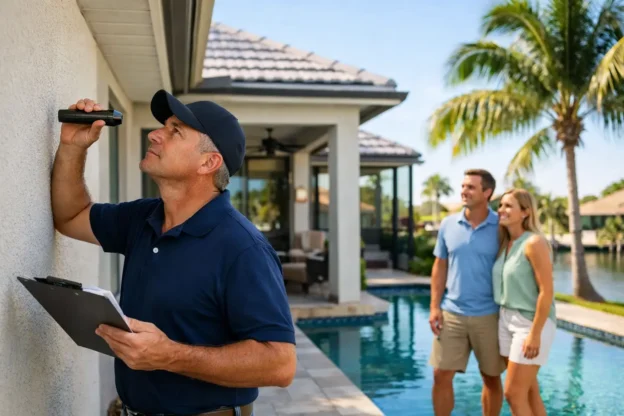
A home can look move-in ready at a showing while carrying moisture behind a wall, a tired roof system, aging electrical components, or storm-related wear that is easy to miss from the ground. A Cape Coral home inspection gives buyers a clear, documented view of the property’s visible condition before their purchase becomes final.
In Southwest Florida, inspections are not simply a box to check before closing. They are a practical part of making a sound real estate decision. Cape Coral homes face intense sun, wind-driven rain, humidity, salt air, and seasonal storms. Those conditions can accelerate wear on roofing, exterior finishes, air-conditioning systems, windows, doors, and plumbing components.
A thorough inspection helps you understand what is working, what needs attention, and which findings may affect your repair planning, insurance documentation, or negotiations.
What a Cape Coral Home Inspection Should Cover
A comprehensive inspection evaluates the home’s readily accessible, visible systems and components. The purpose is to identify material defects, safety concerns, signs of active moisture, and conditions that may require repair or further evaluation by a qualified specialist.
The inspection typically includes the roof, exterior, foundation and structure where visible, attic, interior rooms, electrical system, plumbing system, heating and cooling equipment, insulation, ventilation, doors, windows, and built-in appliances. For condo, townhouse, manufactured home, duplex, and multi-unit properties, the scope is tailored to the property type and accessible areas.
The best inspection reports do more than identify an issue. They explain where it was found, include clear photo documentation, and describe why it matters. That level of detail allows buyers to have better conversations with their real estate agent, seller, contractor, insurer, or lender.
Roofing and Exterior Conditions
The roof is one of the most important parts of a Florida home inspection. It is also one of the components most affected by local weather. An inspector looks for visible signs of aging, damaged or displaced roofing materials, flashing concerns, penetrations, drainage issues, and conditions that may allow water intrusion.
Exterior observations also include wall finishes, soffits, fascia, gutters where present, driveways, walkways, grading, patios, screens, and visible structural elements. In coastal and canal-adjacent areas, exposure to moisture and salt air can affect metal components and exterior finishes over time.
A drone-mounted camera can be especially useful when a roof is steep, fragile, wet, or not safely walkable. A clear aerial view provides better documentation without placing unnecessary stress on the roofing material.
Moisture, Plumbing, and Interior Clues
Water moves quietly. A small plumbing leak, failed seal around a window, roof intrusion, or condensation issue can create damage long before a stain becomes obvious. That is why moisture detection tools and thermal infrared cameras can add real value during an inspection.
These tools do not see through walls or diagnose every hidden condition. They do help identify temperature differences and elevated moisture readings that warrant closer attention. When there is a concern, the report should state what was observed and recommend an appropriate next step.
Inside the home, an inspector also evaluates visible plumbing fixtures, supply lines, drains, water-heating equipment, ceilings, floors, walls, windows, and doors. Slow drains, loose fixtures, staining, damaged finishes, or unusual moisture readings can all provide useful information about the home’s condition.
Electrical and Air-Conditioning Systems
Electrical systems deserve close attention, particularly in older homes that may have experienced renovations over several decades. The inspection includes visible panel components, wiring methods where accessible, outlets, switches, grounding indications, and safety devices. The goal is to identify visible deficiencies and conditions that may require correction.
Air conditioning is not optional in Cape Coral. A system that struggles to cool, drains improperly, shows visible deterioration, or has concerns at the air handler can affect comfort and operating costs from the first day of ownership. The inspection includes a functional review of readily accessible heating and cooling components under normal operating conditions.
An inspection is not a substitute for a full HVAC performance analysis. If the system raises concerns, a licensed HVAC professional may be needed to provide a more detailed assessment and repair estimate. Knowing that before closing is far better than discovering it during the first summer heat wave.
Why Florida Insurance Documentation Matters
Many buyers hear about 4-point inspections and wind mitigation inspections during the insurance process. These services are valuable, but they serve a different purpose than a full home inspection.
A 4-point inspection generally focuses on four major systems: roofing, electrical, plumbing, and HVAC. Insurers may request it for certain properties, especially older homes. A wind mitigation inspection documents features that may help a home perform better during high-wind events, such as roof-to-wall connections, roof deck attachment, opening protection, and other construction details.
Neither report replaces a comprehensive pre-purchase inspection. The full inspection provides the broader property evaluation buyers need, while the insurance-focused reports provide documentation that may be needed for coverage and potential premium considerations. Depending on the home, completing these services together can make the transaction more efficient.
Timing Your Inspection Before Closing
The ideal time to schedule an inspection is as soon as the property is under contract and your inspection period begins. This gives you time to review the report, ask questions, request repair records, obtain contractor input when needed, and make decisions based on the contract terms.
Do not wait until the final days of the inspection period. A detailed report may identify an item that needs a specialist’s opinion, and reputable contractors can have limited availability. More time gives you more options and reduces pressure when decisions matter most.
Buyers should attend the inspection whenever possible. Walking through the property with the inspector creates a better understanding of the findings than reading a report alone. It is also the right time to ask practical questions: Which repairs are urgent? What maintenance should be planned? Which items are common for a home of this age and type?
What to Look for in an Inspection Report
A report should be organized, easy to review, and supported by photographs. You should be able to distinguish between a maintenance item, a repair concern, a potential safety issue, and a condition needing further evaluation.
No house is perfect, including new construction. The value of an inspection is not determined by how many items appear in the report. It is determined by whether the findings are accurate, clearly documented, and useful for your next decision.
For a newer property, the focus may include installation quality, incomplete work, drainage, roof details, safety features, and visible construction defects. For an older Cape Coral home, attention may center more heavily on system age, electrical updates, plumbing condition, roofing life, windows and doors, and prior repair evidence.
A dependable inspector should also be available to clarify the report after delivery. Real estate decisions move quickly, and clear communication matters when buyers are sorting through repair requests, insurance questions, and closing deadlines.
A Better Way to Approach Your Purchase
A home inspection is not designed to create fear around a purchase. It is designed to replace uncertainty with facts. Some findings may be simple maintenance. Others may affect the price you are willing to pay, the repairs you request, or the budget you set aside after closing.
West Coast Home Inspection provides comprehensive inspections for buyers and property owners throughout Southwest Florida, using detailed reporting, moisture detection tools, thermal imaging, and drone-mounted cameras when appropriate. The focus is straightforward: provide a careful evaluation, explain the findings clearly, and give clients information they can use.
Before you commit to a Cape Coral property, give yourself the time and information to make the decision with confidence. A thorough inspection can turn a long list of unknowns into a practical plan for moving forward.