


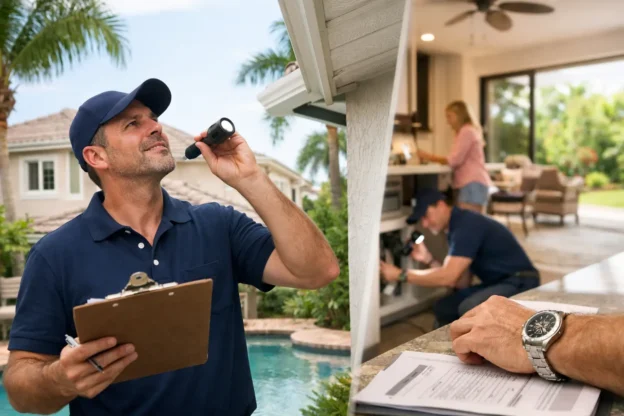
A home inspection is not the part of a real estate transaction to rush. When you are making a major purchase in Southwest Florida, the time spent understanding the home can protect your budget, strengthen your negotiating position, and give you a clearer picture of the property you are about to own.
For most buyers, the question of how long home inspection takes has a straightforward answer: a typical inspection takes about 2 to 4 hours on site. The exact timing depends on the home’s size, age, condition, construction type, and the services requested. A smaller condo may be completed faster, while an older waterfront home, a large residence, or a multi-unit property can require significantly more time.
The best inspection is not the fastest one. It is the one that gives you useful, well-documented information when decisions matter most.
How Long Does a Home Inspection Take?
A standard inspection of an average-sized single-family home generally takes 2 to 4 hours. That range gives the inspector time to examine accessible major systems and components, document findings with photos, and explain significant concerns to the client.
For a home around 1,500 to 2,500 square feet in generally good condition, plan on roughly three hours. Larger homes commonly take four hours or more, especially when there are multiple HVAC systems, additional bathrooms, outdoor living areas, detached structures, or complex rooflines.
Inspection time also includes more than simply walking through rooms. A thorough process involves assessing the structure, roof, exterior, interior, electrical system, plumbing system, heating and cooling equipment, insulation, ventilation, doors, windows, and visible signs of moisture intrusion. In Florida, close attention to moisture-related conditions, roofing details, and exterior components is especially valuable because heat, humidity, storms, and wind exposure can affect a property’s long-term performance.
Time at the property versus report delivery
The on-site visit is only one part of the job. After the inspection, the inspector reviews notes, organizes photos, and prepares a detailed report that clearly identifies findings and recommended next steps.
A quality report should do more than list defects. It should help you understand what was observed, where it was found, why it may matter, and which concerns deserve prompt attention. At West Coast Home Inspection, advanced tools such as thermal infrared imaging, moisture detection equipment, and drone-mounted cameras support a more complete assessment when conditions allow. These tools can add time to the inspection, but they can also provide information that a quick visual walk-through may miss.
What Can Make a Home Inspection Take Longer?
Every home tells its own story. Inspection timing can change when the home has more systems, more square footage, limited access, or conditions that need closer review.
A newer, well-maintained home may move efficiently through the inspection process, but new construction is not automatically simple. New homes can have incomplete work, installation issues, or items that need correction before closing. A careful new construction inspection still requires enough time to inspect the property thoroughly rather than assuming everything is in order.
Older homes often require additional attention. Age can bring updates made over several decades, changes in materials, aging components, and repairs of varying quality. The inspector may need more time to trace visible conditions, review the electrical panel, assess plumbing fixtures, inspect attic areas, and document areas where maintenance or further evaluation is appropriate.
Access matters as well. If the attic hatch is blocked, electrical panels are inaccessible, crawl areas cannot be entered, or personal belongings cover key components, the inspection may take longer or have limitations. Sellers can help keep the appointment on track by ensuring clear access to utility areas, the attic entry, the water heater, HVAC equipment, and any detached buildings included in the sale.
Weather can also affect the process. Southwest Florida rain, wind, and lightning can limit roof access or drone use. An experienced inspector will work safely and document any inspection limitations, rather than taking unnecessary risks. In some situations, a return visit or additional review may be appropriate once conditions improve.
Inspection Timelines by Property Type
Property type has a direct effect on how much time is needed. A small condo may take 1.5 to 2.5 hours, depending on its age, size, systems, and what portions of the building are accessible for inspection. The unit itself may be compact, but its electrical, plumbing, HVAC, windows, doors, balconies, and interior conditions still deserve careful review.
A townhouse commonly takes 2 to 3.5 hours. Shared walls and association-maintained elements can affect the scope, but the individual residence still has many of the same systems found in a detached home.
A manufactured home often takes 2 to 4 hours. Inspectors need time to evaluate accessible structural components, tie-down systems where visible, roofing, plumbing, electrical components, and the condition of the home as a whole.
Duplexes and other multi-unit properties require more time because each unit needs individual attention. Plan for at least 4 hours in many cases, with additional time needed for larger properties, separate HVAC systems, multiple water heaters, or detached structures.
A 4-point inspection and wind mitigation inspection can be shorter than a full home inspection because each has a narrower purpose. Even so, timing depends on access to the requested components and the documentation needed for insurers. If you need these services alongside a full inspection, scheduling them together can be a practical way to gather information in one visit.
Why You Should Attend the Inspection
You do not need to follow the inspector through every minute of the appointment, but being present near the end of the inspection is often helpful. This is your chance to ask questions, see major findings in person, and understand which items are routine maintenance concerns versus issues that may affect your next steps.
An inspector’s role is to provide an objective assessment of the home’s visible and accessible condition at the time of the inspection. The report is not a repair estimate, a guarantee of future performance, or a pass-or-fail grade. It is a professional snapshot designed to help you make informed decisions.
Buyers often find that a few extra minutes of conversation on site makes the written report easier to use later. A clear explanation can help you prioritize requests, plan future maintenance, and decide when a specialist should provide further evaluation.
How to Plan Your Inspection Day
When scheduling, reserve a half-day on your calendar even if the inspection itself is expected to take only a few hours. This gives you room for the on-site appointment, a discussion of major findings, travel, and any follow-up with your real estate professional.
If you are under a contract deadline, schedule as early as possible. The inspection period can move quickly, and an early appointment gives you more time to review the report, ask questions, obtain estimates when needed, and make decisions without unnecessary pressure.
Sellers preparing for a pre-listing inspection should take the same approach. Allowing time for a detailed inspection before the home goes on the market can reveal repairs or maintenance items that may be easier to address on your schedule. It can also reduce surprises once a buyer brings in their own inspector.
Thoroughness Is Time Well Spent
A fast inspection may feel convenient, but convenience should not come at the expense of useful information. A careful inspector works methodically, documents conditions clearly, and takes the time needed to examine accessible systems with the attention your purchase deserves.
Whether you are buying in Fort Myers, Cape Coral, Naples, or another Southwest Florida community, give the inspection appointment the time it needs. A few focused hours can provide the clarity to move forward with greater confidence and a practical plan for the home ahead.