


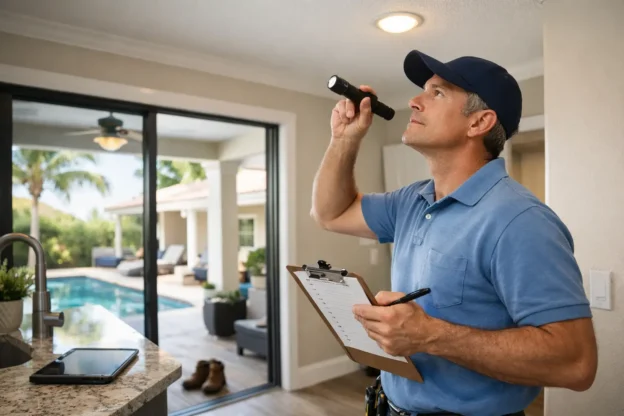
The first year in a new home moves quickly. A twelve month warranty inspection gives you a practical opportunity to identify and document concerns while your builder’s warranty may still apply. For Southwest Florida homeowners, this timing matters. Heat, heavy rain, humidity, wind, and daily use can expose issues that were not apparent at closing.
A new home can look complete and still have conditions worth addressing. Minor settlement cracks, moisture intrusion, drainage concerns, electrical issues, and equipment performance problems often become clearer after the home has been lived in through changing weather. A professional inspection provides an organized record of visible findings, complete with photos and clear explanations, so you can communicate with your builder confidently before the warranty deadline.
What Is a Twelve Month Warranty Inspection?
A twelve month warranty inspection is a comprehensive evaluation of a home near the end of its first year of ownership. It is commonly scheduled around month 10 or 11, giving the homeowner time to receive the report, review warranty terms, notify the builder, and request appropriate repairs before coverage expires.
The purpose is not to declare that every item is a warranty claim. Builder warranties have specific terms, exclusions, maintenance responsibilities, and notice requirements. The inspection’s role is to identify visible and accessible conditions that may need attention, distinguish normal wear from potential defects, and give you documentation for an informed conversation with the builder.
For homeowners, that distinction is valuable. You are not relying solely on memory, a quick walkthrough, or a contractor’s verbal opinion. You have a detailed report that identifies the location and nature of each concern.
Why the First Year Reveals So Much
Construction materials respond to temperature, moisture, and use. In Southwest Florida, a home’s first wet season can reveal how well exterior finishes, roof penetrations, windows, doors, drainage, and air-conditioning systems are performing. Even a carefully built home needs time to settle into real-world conditions.
Indoor comfort also tells a story. Uneven temperatures, excessive condensation, persistent odors, slow drains, or doors that no longer latch properly can point to conditions that deserve a closer look. Some findings may be simple adjustments. Others may require further evaluation or builder correction. A thorough inspection helps establish which is which.
New construction inspections at closing remain valuable, but they do not replace an end-of-warranty inspection. The two inspections serve different moments in the ownership timeline. The final walkthrough focuses on what is visible before move-in. A twelve month warranty inspection reflects how the house has performed after months of occupancy and weather exposure.
What a Professional Inspection Typically Covers
The scope should be comprehensive and focused on major accessible systems and components. At West Coast Home Inspection, the goal is to provide the kind of clear, practical information homeowners need to act before a deadline.
Exterior, Roof, and Site Conditions
The inspector evaluates visible exterior components such as siding or stucco finishes, trim, windows, exterior doors, visible roof areas, gutters where present, and the relationship between the home and surrounding grade. In Florida, water management deserves close attention. Conditions around the foundation, walkways, lanai, exterior openings, and roof drainage can affect how water moves during a storm.
Settlement-related cracking may also be documented when visible. Not every crack has the same significance. Hairline changes in finishes can occur as a home dries and settles, while wider, recurring, or strategically located cracks may warrant builder review. The report should describe what was observed without guessing beyond what the evidence supports.
Interior Surfaces and Functional Components
Inside the home, the inspection reviews accessible ceilings, walls, floors, doors, windows, stairs, cabinets, and visible finishes. This is where homeowners frequently notice everyday frustrations: a sticking door, a window that does not operate smoothly, grout cracks, separated caulk, damaged trim, or an area of flooring that feels uneven.
These details can seem small when considered one at a time. Documented together, they create a useful repair list for your warranty request. They also help the builder understand precisely what needs to be reviewed, rather than asking the homeowner to explain a concern from memory.
Plumbing, Electrical, and HVAC Systems
The inspection includes accessible plumbing fixtures and visible supply and drain components, along with electrical panels, representative outlets and switches, installed lighting, and other accessible electrical elements. The heating and cooling system is assessed for visible conditions and general operation at the time of the inspection.
Southwest Florida’s humidity makes moisture-related findings especially relevant. Moisture detection tools and thermal infrared cameras can help identify temperature irregularities or elevated moisture patterns that may not be obvious during a standard visual review. These tools do not replace further evaluation when needed, but they can provide useful evidence and help direct attention to areas that deserve a closer look.
When Should You Schedule It?
The best time is usually before the one-year anniversary, not on it. Scheduling around the 10th or 11th month gives you breathing room. You need time to receive the report, compare findings with your warranty documents, submit a written request to the builder, and coordinate any follow-up work.
Do not assume the warranty clock begins on the day you moved in. Depending on the builder and contract, the relevant date may be tied to closing, occupancy, or another stated milestone. Read your warranty paperwork early and confirm the notification process. Some builders require requests through an online portal, while others specify email, written notice, or a designated warranty representative.
If you are already close to the deadline, it is still worth acting promptly. An inspection may help you identify concerns that should be reported immediately, even if repair scheduling occurs later. Keep copies of your inspection report, builder communications, photos, and confirmation that your request was received.
How to Prepare for the Inspection
You do not need to prepare the house perfectly, but access makes the inspection more productive. Clear stored items away from the electrical panel, HVAC equipment, attic access, sinks, and major appliances where possible. Make sure pets are secured and that the inspector can access exterior areas, garages, utility rooms, and any community-controlled spaces that are part of the property.
It also helps to keep a short list of concerns you have noticed during the year. Note when and where the issue occurs. For example, mention that a window leaks only during wind-driven rain, a bedroom stays warmer than other rooms, or a door binds after humid weather. Your observations add valuable context, especially for conditions that may not appear during the appointment.
The goal is not to direct the inspection. It is to make sure your real-world experience in the home is part of the conversation.
What to Do With the Report
Review the report soon after it arrives and compare the findings with your builder warranty. Focus first on items involving moisture, exterior performance, safety, major systems, or conditions that could worsen if left unresolved. Then submit your warranty request according to the builder’s stated process.
Keep the communication factual and organized. Reference the report item, location, and photo number when applicable. Request an acknowledgment of receipt and save all responses. If the builder sends a representative to review the home, be prepared to show the documented condition and explain when you first noticed it.
Some items may fall outside warranty coverage or be considered maintenance responsibilities. That does not make the inspection a wasted effort. You still gain a prioritized maintenance plan and a clearer understanding of your home’s condition. In many cases, early awareness gives you more control over cost, timing, and repair decisions.
Detailed Documentation Makes the Difference
A warranty conversation is easier when the concerns are specific. Broad statements such as “the house has problems” rarely produce useful results. A detailed inspection report with descriptions and photo documentation gives both homeowner and builder a common reference point.
That level of detail is particularly useful after a Florida storm season, when several conditions may appear at once. Advanced tools, including thermal imaging, moisture detection, and drone-mounted cameras when conditions allow, can support a more complete assessment of accessible areas without adding unnecessary guesswork.
Your home is still new, but it has already begun showing how it performs. Schedule your twelve month warranty inspection early enough to turn that first year of experience into clear, timely action.