


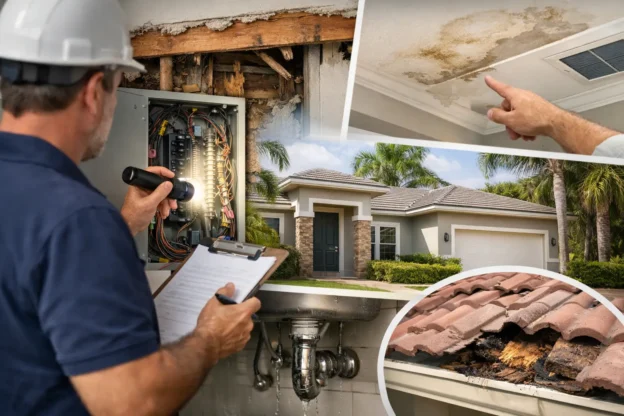
A beautiful kitchen and fresh exterior paint can make a home feel ready for move-in day. The top issues found in home inspections often sit behind those finishes: in an attic, electrical panel, crawlspace, ceiling, or air-conditioning system. For Southwest Florida buyers, identifying those conditions before the end of the inspection period can protect both the purchase decision and the budget that follows.
A home inspection is not a pass-or-fail test, and no home is perfect. Its value is in providing a clear picture of the property’s visible condition, safety concerns, and maintenance needs. Some findings call for prompt repair. Others are normal for a home’s age but still deserve planning and documentation.
Top Issues Found in Home Inspections
1. Roofing concerns and roof-life questions
Roofing is one of the most consequential findings because replacement costs can be substantial and insurance eligibility may depend on roof age and condition. Inspectors look for damaged or missing shingles or tiles, exposed fasteners, deteriorated sealant, ponding water on low-slope surfaces, and signs of prior repairs. Inside the home, staining on ceilings or in the attic may point to an active or historic leak.
In Florida, the question is not only whether the roof is leaking today. Buyers also need to understand its remaining service life, how it has held up against weather exposure, and whether documentation exists for repairs or replacement. A roof that appears serviceable may still warrant a conversation with an insurance agent or qualified roofing professional before closing.
2. Moisture intrusion and water damage
Water travels. A stain near a window may originate from flashing, exterior wall penetrations, roof drainage, plumbing, or an upstairs fixture. Moisture-related findings can range from a small repair to evidence of a longer-term condition that has affected framing, drywall, flooring, or finishes.
A thorough inspection considers the entire pattern, not just the visible stain. Moisture detection tools and thermal infrared cameras can help identify areas that warrant closer evaluation when conditions allow. In coastal and humid Southwest Florida environments, prompt attention to water entry is especially valuable because prolonged dampness can lead to material deterioration and indoor air-quality concerns.
3. Electrical safety defects
Electrical findings are common in homes of every age. Some are straightforward, such as missing cover plates, loose receptacles, or nonfunctioning outlets. Others require more attention, including double-tapped breakers, improper wiring connections, inadequate grounding, open junction boxes, panel corrosion, or outdated components.
Ground-fault protection is another frequent concern. Kitchens, bathrooms, garages, laundry areas, and exterior outlets typically need the right protection to reduce shock risk. An inspector can identify visible deficiencies, but repairs or upgrades should be completed by a qualified electrical professional. A clear inspection report helps buyers distinguish a simple correction from a larger evaluation of the system.
4. Air-conditioning and HVAC performance
Few systems matter more to daily comfort in Southwest Florida than air conditioning. Inspectors operate the system when conditions permit and review visible components, including the air handler, condenser, insulation on refrigerant lines, condensate drainage, filters, and accessible ductwork.
Common concerns include insufficient cooling, dirty or damaged components, leaking condensate lines, inadequate insulation, rust, unusual noise, and signs of deferred servicing. An older unit does not automatically need replacement, but its age, performance, and maintenance history should shape a buyer’s expectations. If the system raises concerns, a licensed HVAC contractor may be needed to assess capacity, refrigerant issues, or repairs beyond the scope of a general inspection.
5. Plumbing leaks, drainage, and aging supply lines
Plumbing defects can be quiet and costly. Inspectors check accessible supply lines, drainpipes, fixtures, water heaters, shutoff valves, and visible signs of leakage beneath sinks and around toilets. Slow drains, loose fixtures, corroded valves, and active drips are common findings that should not be dismissed simply because they seem small.
Water heaters deserve close attention as well. Their age, visible condition, installation, pressure-relief components, and drainage setup all matter. In older homes, the type and visible condition of supply and drain materials can also affect a buyer’s repair planning and may be relevant to insurance questions. A sewer line scope is a separate specialized service, so a general inspection may identify indicators that justify further review rather than diagnose the underground line itself.
6. Foundation, framing, and structural movement
Most cracks are not a structural emergency. Concrete naturally shrinks and settles, and minor surface cracking can be common. What matters is the crack’s location, width, direction, movement indicators, and relationship to other conditions such as sloping floors, sticking doors, separated trim, or displaced masonry.
Inspectors document visible signs that may point to structural movement or wood deterioration. When the evidence suggests a more significant concern, a structural engineer or other qualified specialist can provide the analysis needed for repair decisions. Buyers should resist two extremes: assuming every crack is serious or assuming every crack is cosmetic.
7. Doors, windows, and exterior openings
Windows and exterior doors protect the home from wind-driven rain, heat, pests, and unwanted air movement. Common findings include failed seals, damaged screens, missing or deteriorated caulk, windows that do not open or lock properly, and doors that bind or have worn weatherstripping.
For Florida properties, impact-rated openings, shutters, and other storm-protection features can affect both resilience and insurance documentation. A home inspection can identify visible conditions and verify accessible features, while a wind mitigation inspection focuses on specific construction details that may be useful for insurance purposes. These services answer different questions and can work well together.
8. Attic ventilation, insulation, and visible wood conditions
The attic often tells a more complete story about a home than the living room does. Inspectors look for insulation coverage, ventilation, visible roof sheathing conditions, disconnected ducts, exhaust fans terminating in the wrong location, and evidence of water entry or pest activity.
Insufficient insulation can increase cooling costs, while poor ventilation may contribute to excessive heat and moisture buildup. Attic access can be limited by construction, stored belongings, or safety conditions, so a report should clearly state any areas that could not be fully viewed. That transparency matters as much as the findings themselves.
9. Grading, drainage, and exterior maintenance
The home’s exterior should direct water away from the structure. Negative grading, damaged gutters, short downspout extensions, clogged drainage paths, and deteriorated exterior sealant can all contribute to water issues over time. In Florida, heavy seasonal rain can expose drainage weaknesses quickly.
Exterior maintenance findings may also include damaged siding, compromised stucco, wood rot, loose railings, cracked walkways, or vegetation contacting the structure. Not every exterior defect needs an immediate major project, but addressing the source of water exposure early is usually less expensive than repairing the damage it causes later.
10. Safety items that need correction
Many inspection reports include safety items that are affordable to correct but meaningful to occupants. Missing smoke alarms, improper handrails, loose steps, damaged garage-door safety features, missing anti-tip brackets on ranges, and unsecured pool barriers are examples.
These items can be easy to overlook during a showing because they do not always affect appearance. Yet they deserve timely attention, particularly in homes with children, older adults, guests, or rental occupants. A detailed report with photographs makes it easier to prioritize the work after closing or during repair negotiations.
How Buyers Should Use Inspection Findings
The best response to inspection findings depends on the home, local market conditions, and the buyer’s plans. A newer home can still have installation defects, while an older home may be well maintained with a manageable list of updates. Focus first on safety concerns, active water intrusion, significant system deficiencies, and conditions likely to affect insurance, financing, or near-term ownership costs.
Then ask practical questions. Is the issue active? What is the likely scope of repair? Is a specialist needed? Can the seller provide permits, invoices, warranties, or maintenance records? The inspection report should give buyers a reliable starting point for those conversations, not force them to guess at what they are seeing.
West Coast Home Inspection uses detailed reporting and advanced tools, including moisture detection, thermal imaging, and drone-mounted cameras when appropriate, to provide a more complete view of accessible property conditions. Clear communication matters because an inspection is most useful when clients understand not only what was found, but what to do next.
A property does not need to be flawless to be a sound purchase. It needs to be understood. When you have a thorough inspection report, qualified follow-up where needed, and a realistic repair plan, you can move forward with far greater confidence.